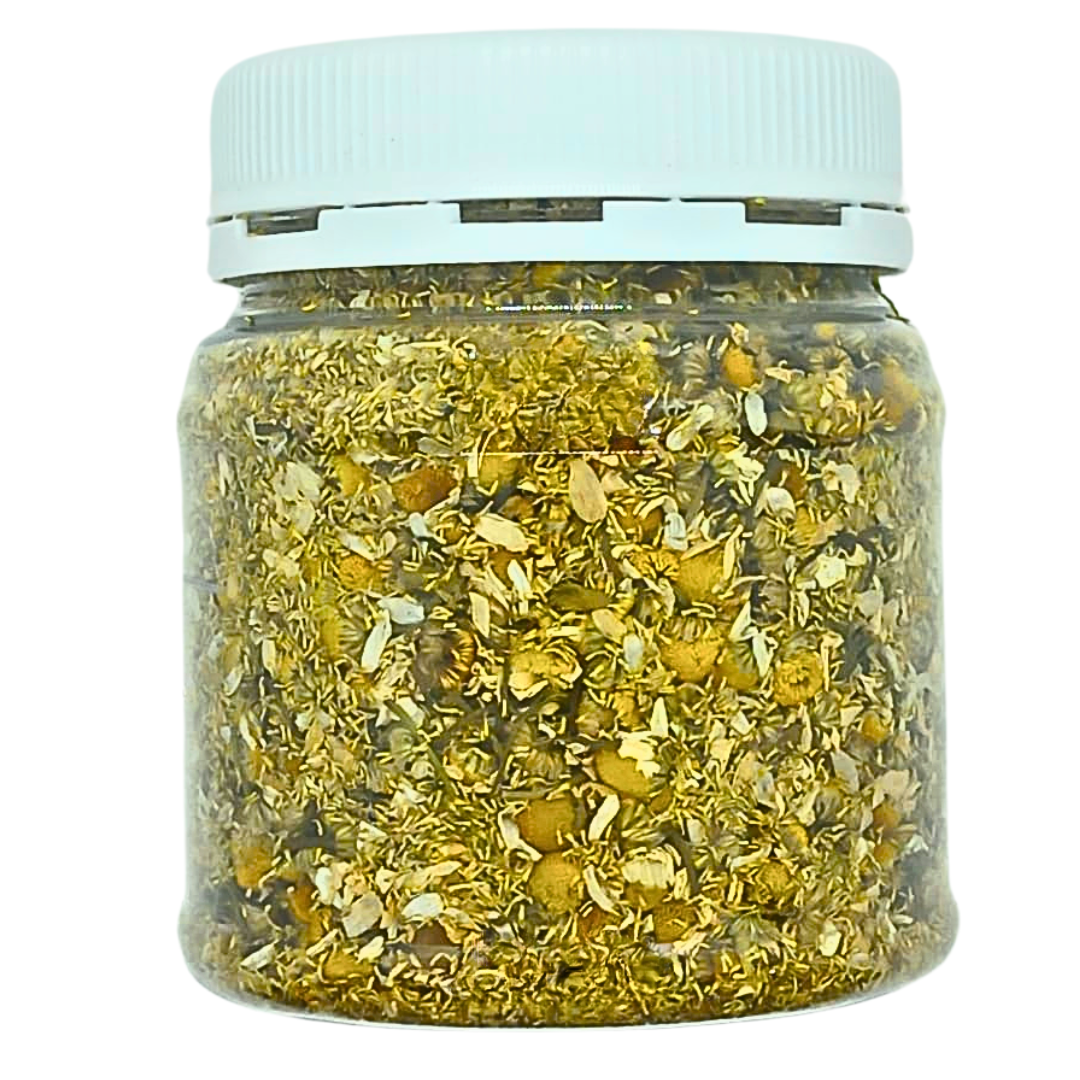
Chamomile Flowers:
Description: Chamomile (Matricaria chamomilla or Chamaemelum nobile) is a flowering herb that has been used for centuries in traditional medicine and as a soothing herbal remedy. The dried flowers of chamomile are commonly used to make herbal infusions or teas. Chamomile is known for its mild, apple-like aroma and is often sought after for its calming and relaxing properties.
Nutritional Breakdown: Chamomile flowers, when consumed as a tea, do not provide significant macronutrients, but they contain various bioactive compounds:
- Flavonoids: Including apigenin, quercetin, and patuletin, which have antioxidant properties.
- Terpenoids: Such as chamazulene, which contributes to chamomile’s anti-inflammatory effects.
- Essential Oils: Chamomile contains essential oils like bisabolol and chamazulene, contributing to its characteristic scent and potential health benefits.
Potential Benefits:
- Calming and Relaxation:
- Chamomile is widely known for its calming and relaxing properties. Drinking chamomile tea may help reduce stress and promote better sleep.
- Digestive Support:
- Chamomile tea has been traditionally used to alleviate digestive discomfort, including indigestion and bloating.
- Anti-Inflammatory Effects:
- Compounds like chamazulene in chamomile have anti-inflammatory properties, potentially beneficial for inflammatory conditions.
- Immune Support:
- The antioxidants in chamomile may contribute to immune system support by neutralizing free radicals.
- Skin Health:
- Chamomile’s anti-inflammatory and soothing properties may benefit skin health. It’s sometimes used topically for minor skin irritations.
How to Use Chamomile Flowers:
- Chamomile Tea:
- The most common way to use chamomile flowers is by brewing them into a tea. Steep dried chamomile flowers in hot water for a few minutes, then strain and enjoy.
- Infusions:
- Infuse chamomile flowers in oil to create a soothing herbal oil. This oil can be used topically for massages or applied to the skin for hydration.
- Bath Soak:
- Add dried chamomile flowers to your bath for a relaxing and aromatic soak. This can be especially soothing before bedtime.
- Homemade Potpourri:
- Combine dried chamomile flowers with other fragrant herbs to create a natural potpourri for a pleasant aroma in your home.
- Chamomile Poultice:
- Make a chamomile poultice by soaking chamomile flowers in warm water and applying the moistened flowers to the skin. This can be used for minor skin irritations.
- Chamomile-Infused Honey:
- Infuse honey with dried chamomile flowers by letting the flowers steep in honey for several days. Use this infused honey in teas or as a natural sweetener.
Caution:
- Allergies: Individuals with allergies to plants in the Asteraceae family (like ragweed) may experience cross-reactivity and should exercise caution with chamomile.
- Pregnancy: Pregnant women should consult with a healthcare professional before consuming chamomile in large amounts.
Chamomile is generally considered safe for most people when consumed in moderation. However, it’s always advisable to consult with a healthcare professional, especially if you have specific health concerns or conditions.